
Programme and Projects
Pensions for the elderly
The pension scheme was Kwa Wazee’s first initiative in 2003. The aim was to reduce extreme poverty amongst older people by providing those aged 65 and over with a monthly cash payment of 15,000 Tanzanian shillings (approx. 5 CHF in September 2026) and a payment of 7,500 Tanzanian shillings for each grandchild in their care. The pensions are distributed on so-called ‘Pay Days’ in the communities. In 2025, Kwa Wazee supported 767 older women and men, as well as 72 dependent children, through the pension fund. These small amounts increase the household’s disposable income by almost 80 per cent. This enables a more varied diet, allows for the purchase of more everyday essentials (soap, oil, rice, etc.) and ensures better protection in times of crisis. Furthermore, mental wellbeing improves significantly and physical health at least stabilises. Those who receive a pension gain prestige and respect within the family and the village community. In addition, local shops are more likely to grant loans. Children living in supported households have to do less hard labour and have more time to play. Their educational opportunities also improve. In 2016, Kwa Wazee introduced a universal pension in two villages in order to feed the experience and insights gained into the national debate on the introduction of a state social pension. In 2024, 112 women and 58 men were still part of the pilot project. Since 2017, the semi-autonomous region of Zanzibar has been paying a basic monthly pension of 20,000 Tanzanian shillings to everyone over the age of 70. The data collected from the two small villages has therefore become less relevant. The evaluation of the pension programme, carried out in 2012 by Jana Borchard, Lara Kirch and Lisa Ronneburger at Philipps University of Marburg using Amartya Sen’s Capability Approach, reached the following conclusion: ‘The Social Cash Transfer Plus programme run by the non-governmental organisation Kwa Wazee in Nshamba has a strongly positive impact on the lives of pension recipients and, indirectly, on the lives of their grandchildren as well.’
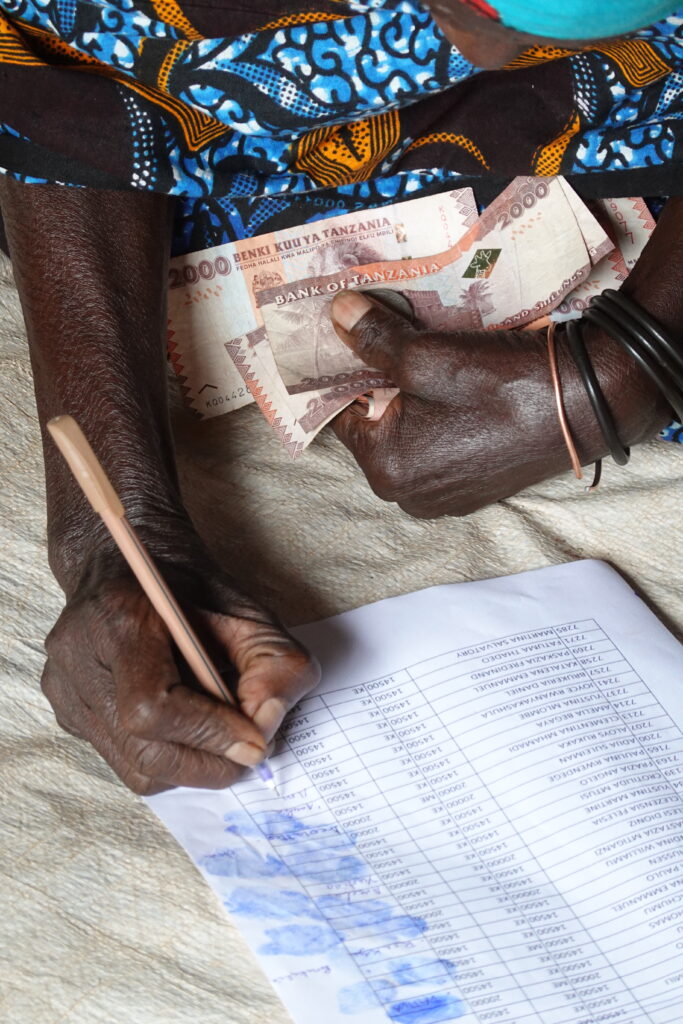
As was already established in the evaluation carried out in 2008, the pension payments help to improve the prospects of achieving physical well-being – such as food, accommodation and clothing – and contribute to meeting basic material needs. Whilst social cash transfers help grandmothers and grandfathers to meet their basic needs, Pss-Light activities (neighbourhood groups) serve to strengthen the human and social capital of older people, which makes the programme particularly sustainable. No other project is known to have implemented this ‘added value’ to date.»
Health
Kwa Wazee, in collaboration with state health facilities, regularly carries out screenings for non-communicable diseases amongst older people in the districts. On average, 40 per cent of those screened are found to have significantly high blood pressure; some of them also suffer from paralysis or facial asymmetry. During the rainy months, many older people are diagnosed with malaria. They receive medication and are advised on preventive measures. Musculoskeletal complaints such as knee, back or hip pain are also common. Kwa Wazee is also committed to providing eye care. Visual aids are regularly issued and medication distributed. At Ndolage Hospital, cataract operations are also regularly performed for older people. Last year, Kwa Wazee organised training courses for healthcare workers in local health centres (dispensaries) to refresh their knowledge of geriatric medicine and to train new staff.
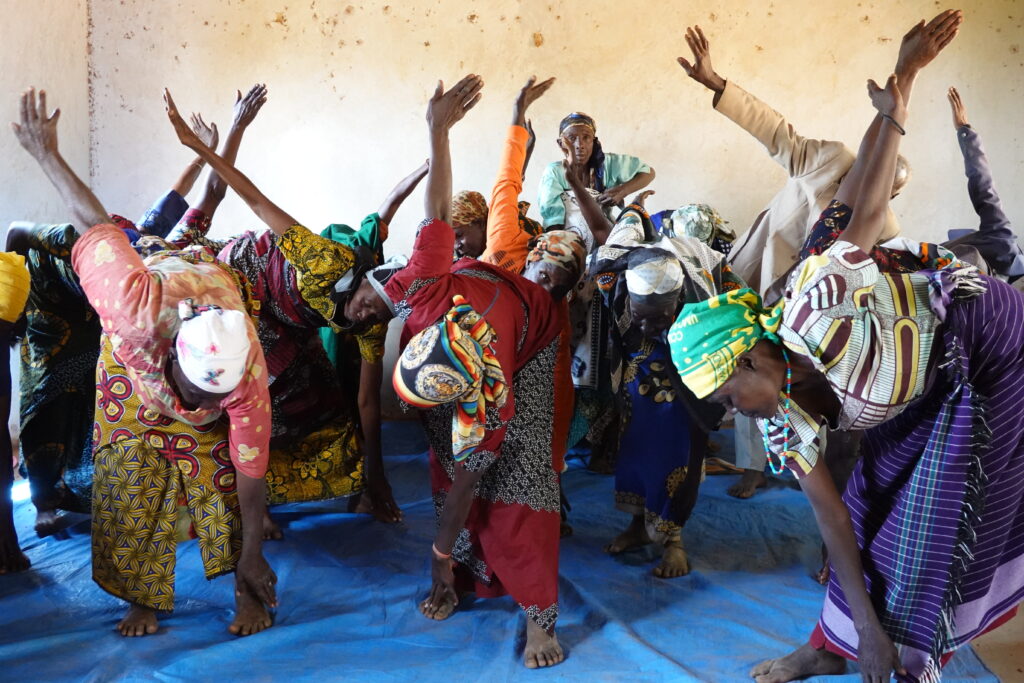
In several districts, Kwa Wazee also initiated the establishment of sports clubs for older people to promote physical activity within the communities. These clubs help to improve fitness and mental wellbeing, and provide resources and knowledge to strengthen the rights and wellbeing of older people.
Psychosocial support groups
Pensions make an important contribution to combating poverty and empower people. However, they alone are not enough to cope with major crises, such as serious illnesses. Self-organisation within neighbourhood groups therefore provides an additional safety net and is a key factor in the success of Kwa Wazee. The groups set their own rules and establish individual goals. These include, for example, mutual support, collective saving, income-generating activities and social interaction. Kwa Wazee supports these groups with specialist expertise and material assistance. For instance, the organisation builds wells and energy-efficient stoves for the groups. Members receive training in leadership, minute-taking and participatory decision-making. They also receive support for growing pineapples, avocados, peanuts, beans and maize.
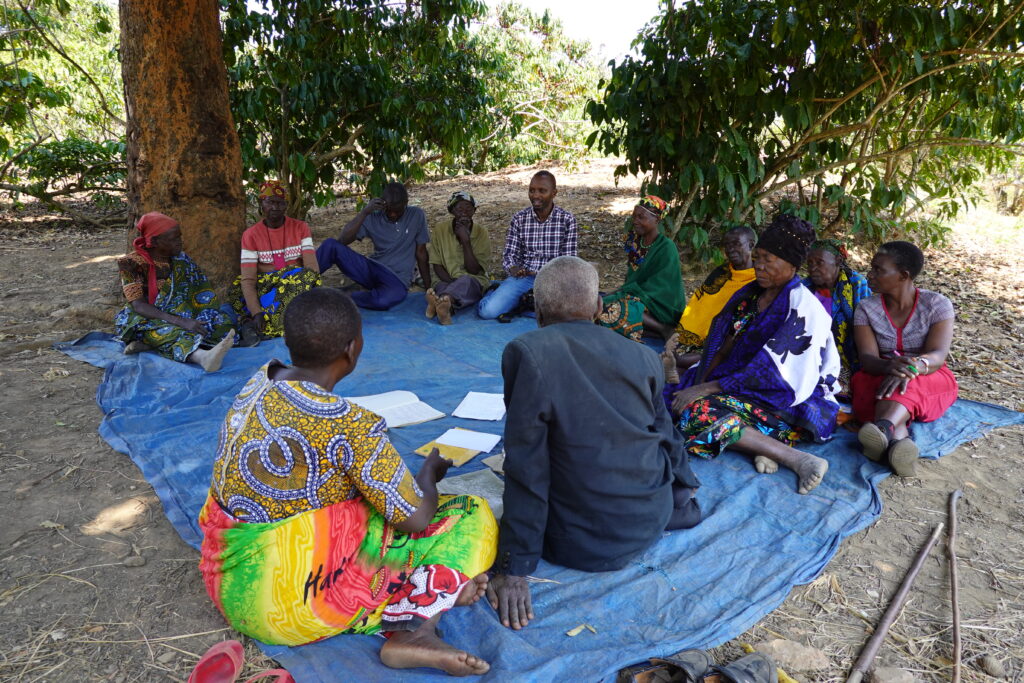
In addition, they benefit from the revolving goat scheme, through which they are provided with livestock.
Advocacy
Kwa Wazee raises awareness of the issues facing older people and is actively committed to combating discrimination, violence and exclusion. It places particular emphasis on promoting legal frameworks, access to healthcare, and strengthening participation and social security.
Through dialogue events at community level, Kwa Wazee facilitates exchange between older people, community representatives and other local stakeholders. Together, they aim to tackle challenges such as dispossession, land grabbing, neglect, and access to medical care and legal assistance. In urgent cases, Kwa Wazee arranges emergency aid, for example by putting people in touch with health authorities or providing legal and financial support.
In addition to individual counselling and support on conflict and legal issues, Kwa Wazee specifically promotes measures to combat age discrimination and stigmatisation. These include setting up and training advisory committees, as well as targeted prevention and awareness-raising campaigns on issues such as violence, accusations of witchcraft and the impact of climate change on older people. Another key focus is on political advocacy. The Organisation
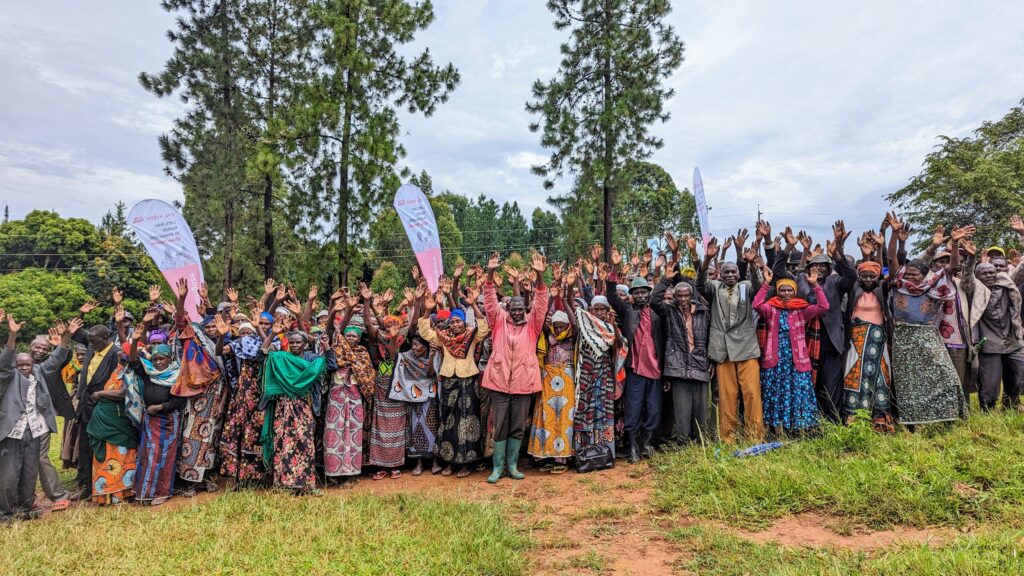
actively participates in national and regional days of action and brings older people together with political decision-makers. In doing so, it raises key concerns, including the call for a legal framework for policy on older people, access to age-appropriate healthcare, measures to protect against the consequences of climate change, greater participation in political decision-making processes and the introduction of a universal pension system.
Overall, through its advocacy activities, the organisation helps to bring about structural improvements for older people, strengthen their position in society and provide practical support in their everyday lives.
Economic empowerment of older people in the Kagera region
Tanzania is undergoing demographic change. 5.7 per cent of the population are aged 60 and over. In the Kagera region, many older people rely on small-scale farming. They have virtually no access to pensions or formal social security systems. Changing family structures and the exodus of young people are also weakening traditional support networks. 41.7 per cent of households headed by an older person suffer from moderate to severe food insecurity.
Many older people in the communities can no longer meet their basic needs. Physical limitations, a lack of inputs and outdated methods reduce their productivity. 96 per cent of older people in Tanzania have no secure pension.
Kwa Wazee aims to make older people economically independent through sustainable agriculture and livestock farming.
To this end, older people are introduced to improved, climate-resilient methods for pineapple cultivation, thereby increasing their productivity and marketing opportunities. They are provided with dairy goats and training in species-appropriate husbandry. Peer-learning networks connect experienced pineapple farmers with new groups. Self-help groups receive agricultural inputs, training and revolving start-up capital.
Some groups are already operating successfully. For example, the ‘Upendo Group’ generated a turnover of 264,000 TZS from pineapple sales in its first year. Individual fruits can fetch up to 1,500 TZS.
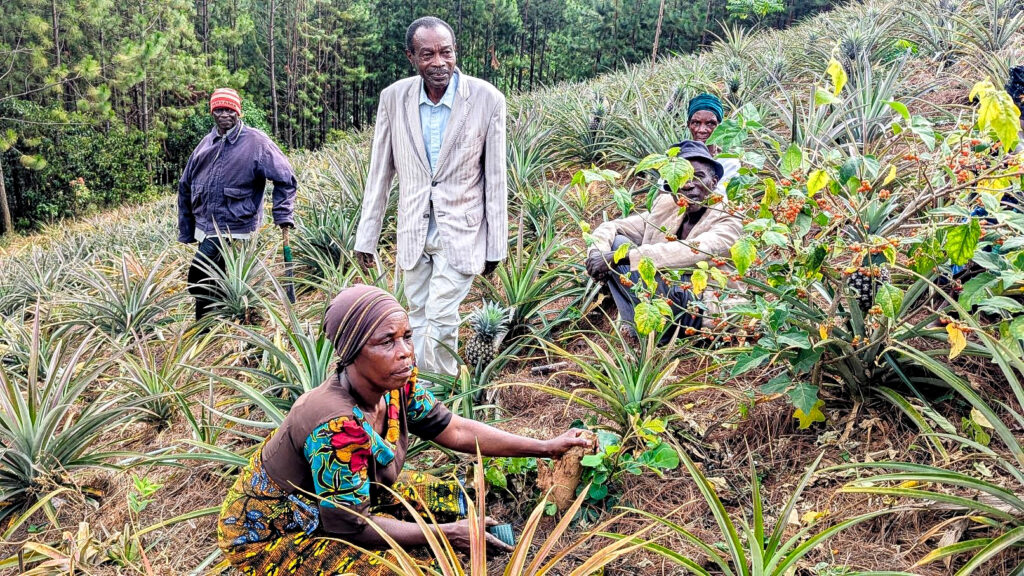
Pineapple cultivation is well suited to the local soil conditions and can withstand drought. Kwa Wazee provides training in modern farming methods and soil fertility. Each elderly person receives a pregnant dairy goat. The training covers topics such as husbandry, feeding, health and building goat sheds. Through a revolving system, the first female kid is passed on to the next person.
In addition to the direct beneficiaries, their family members also benefit indirectly from pineapple cultivation and goat rearing, as their income and diet improve.
Kwa Wazee expects the following outcomes:
1. A higher and more stable income from pineapples and goats.
2. Less financial dependence on children and families.
3. Better nutrition through goat’s milk and diversified crops.
4. Effective peer-learning networks.
5. A sustainable system for passing on goats and a group fund.
Protection against the effects of climate change
The Kagera region is particularly hard hit by climate change: it is reducing crop yields, threatening food security and placing a burden on the most vulnerable in particular. Older people are especially affected; in some villages, they are even unjustly blamed for the changes. That is why Kwa Wazee has stepped up its efforts: through targeted awareness-raising in the communities and through concrete climate-resilient measures that help older people cope better with the consequences. For example, in collaboration with local agricultural and environmental authorities at district and community level, Kwa Wazee distributes improved, drought-tolerant seedlings. Through practical training sessions, all beneficiaries learn how to farm in a climate-friendly and resilient manner. This ensures that harvests remain reliable even when rainfall is irregular, dry spells become longer or the weather is more unpredictable.

Kwa Wazee combines targeted training with practical support and close cooperation with local authorities – a crucial step towards effectively protecting older people from the effects of climate change.
The story of Kwa Waze
In the late 1990s, the region in north-western Tanzania was particularly hard hit by the HIV/AIDS pandemic. It is estimated that between 15 and 20 per cent of the adult population was infected with HIV. During the peak of the pandemic, thousands of children in the Kagera region were affected by the loss of their parents to AIDS. Figures are only available for 2007: at that time, 2.7 million AIDS orphans were counted across Tanzania. Around half of them were taken in by grandparents, mostly grandmothers. This led to the traditional care system becoming overwhelmed. Dr Kurt Madörin, a sociologist born in Sissach, Basel-Landschaft, in 1938, began setting up the first organisation run by orphans themselves, Vijana Simama Imara (VSI), in 1998, to provide the children with support in the areas of education, medical care, nutrition and psychosocial support. He soon realised that it was not only the children, but above all their wider community, that needed help. Upon reaching retirement age, he founded the NGO Kwa Wazee Tansania in Nshamba in 2003. With financial support from a Swiss association of the same name, established in spring 2004, he began paying small monthly pensions to grandparents who were looking after their grandchildren. This pilot project was one of the first in southern Africa to provide unconditional cash payments.
The regular pension payments proved to be very effective in organising older people into neighbourhood groups.
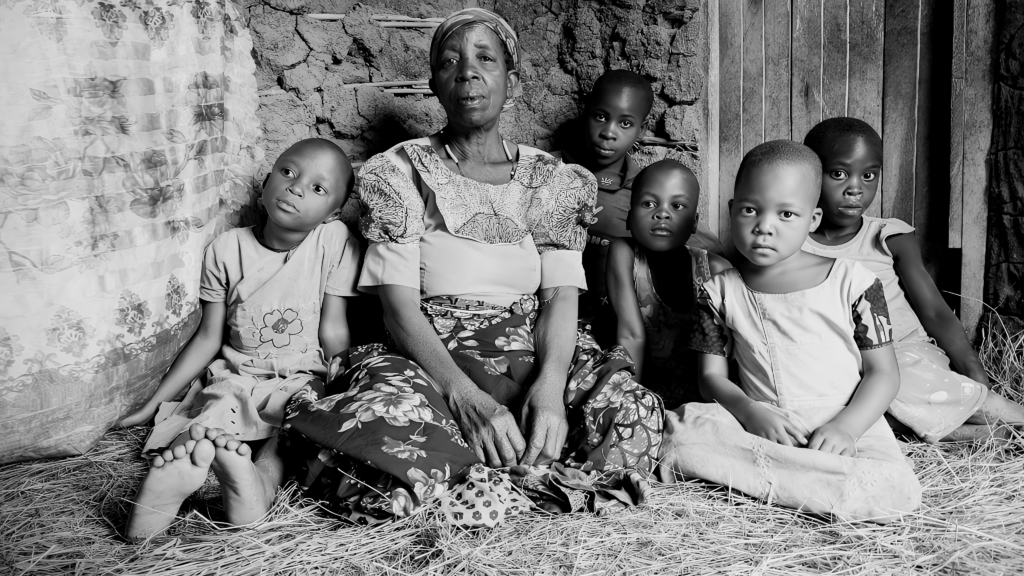
Since its foundation, Kwa Wazee has repeatedly developed new programmes with these groups, based on mutual support.
The availability and use of antiretroviral drugs in the late 2000s significantly reduced the mortality rate from HIV/AIDS. However, Tanzania still lacks a universal pension system that safeguards the basic needs of older people.
Particularly at a time when climate change is further increasing the risk of poverty, the Kwa Wazee pensions make an important contribution to alleviating precarious circumstances and improving the quality of life for older people. At the same time, they help to reduce social injustices faced by older people. Not being destitute brings social recognition and contributes to self-respect.